
I approach software engineering as a discipline of responsibility.
Building features is only a small part of the job. The real work begins when those features have to survive production traffic, evolving requirements, new engineers, and time. What matters is not just that something works, but that it can be understood, debugged, changed, and trusted long after it ships.
I care deeply about systems that explain themselves — systems where behavior is observable, failures are diagnosable, and decisions are visible in the structure of the code. In my experience, this matters far more than clever abstractions or marginal performance gains.
What Engineering means to me
Over the years, my understanding of engineering has shifted from building things to owning outcomes.

Software doesn’t exist in isolation. It is built, tested, deployed, monitored, debugged, and maintained — often by people who didn’t originally write it. Good engineering accounts for this entire life-cycle. It reduces ambiguity, limits hidden coupling, and makes the system easier to reason about under pressure.
Most systems fail not because they didn’t anticipate the future, but because they never validated their present assumptions.
That belief shapes how I design systems: by testing boundaries early, favoring clarity over speculation, and writing code that is correct, observable, and resilient to change.
Experience – Earned the hard way
I’ve spent a significant part of my career working on systems that already existed — systems that had grown large, messy, and difficult to change.
I’ve refactored production codebases where speed once mattered more than clarity, and scaled systems when the need actually arrived, not before. Along the way, I learned what holds up under real-world pressure and what quietly creates future problems.
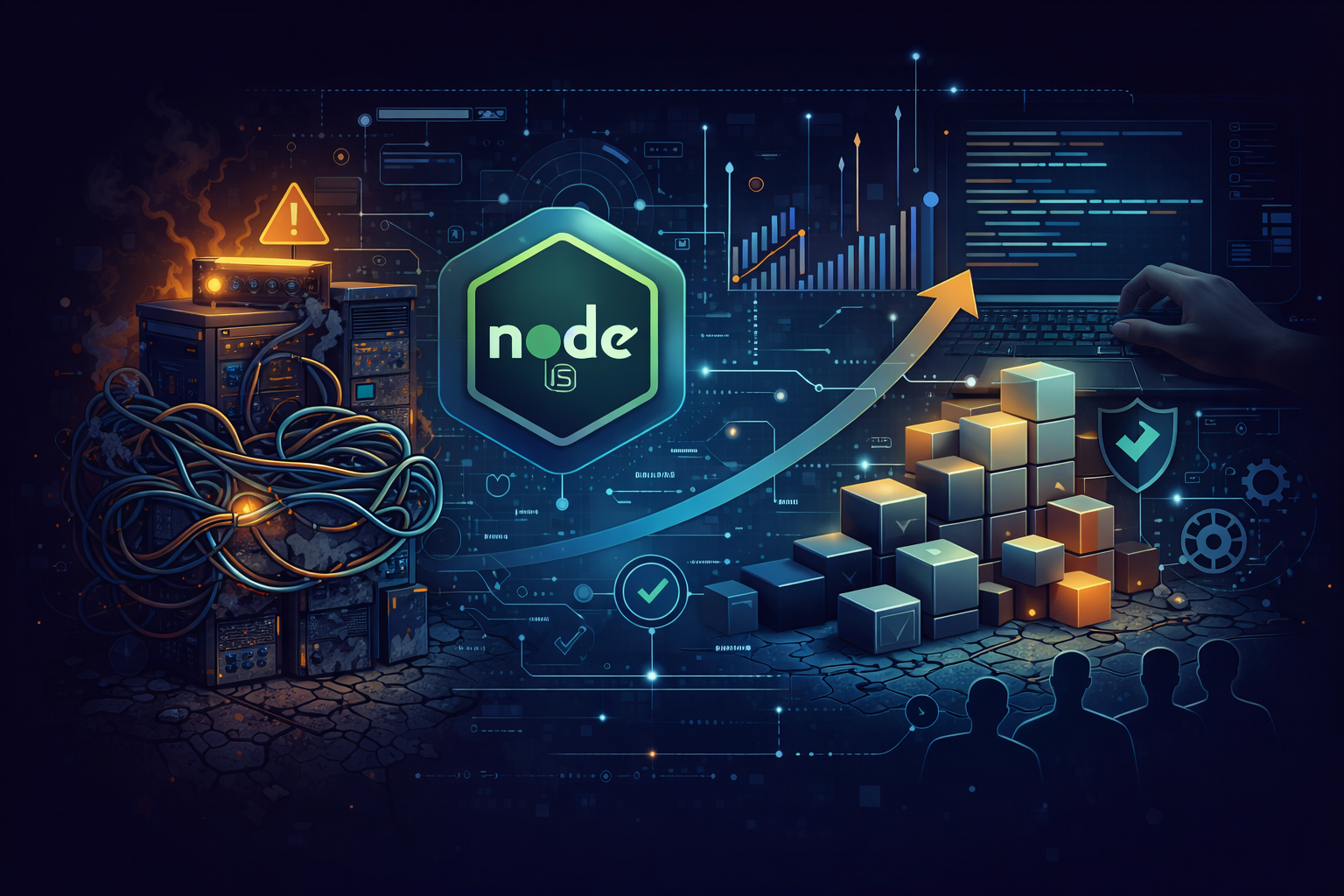
One thing I’m particularly proud of is building my own Node.js framework from the ground up, shaped by patterns I learned through experience. Over time, it naturally began to resemble established frameworks — not by imitation, but because the underlying problems demanded similar solutions. That process reinforced an important lesson for me: good structure makes refactoring easier, scaling safer, and long-term maintenance possible.
What working with me is like
I’m not optimized for speed at the cost of correctness.
I work best with teams and clients who care about doing things right — even when that means slowing down early to reduce long-term complexity. I value long-term engagement, clear ownership, and shared responsibility for production systems.

I’m selective about the work I take on, because good engineering requires focus, trust, and the willingness to think beyond the immediate task. In return, I bring reliability, thoughtful decision-making, and an engineering mindset grounded in real production experience.
If this resonates with you
If you’re looking for someone to help evolve a serious system, untangle complexity, or build software that is meant to last — not just ship — I’m open to a conversation.
You don’t need everything figured out. Clarity often emerges through the work itself.